
You found a car at a yard sale, inherited a box of them, or pulled something unusual from a bin — and now you need a name. Identifying a Hot Wheels is the first step to knowing what it is, what it's worth, and where it fits in your collection. The good news: a single model carries more clues than most people realise. Here's how an experienced collector reads a car, clue by clue — and the shortcut for when you have a whole box to get through.
Start with the base
Flip the car over — the base is its birth certificate. It almost always carries the casting name (the model's official name), a copyright year, and the country of manufacture. One important trap: the copyright year is when the casting was designed, not when that particular car was released. A base stamped "1998" can belong to a car sold many years later, because Mattel reuses tooling for decades. Treat the base year as a clue to the casting's origin, not the release date.
Read the wheels
Wheels are one of the fastest ways to date and classify a car. The famous red-striped Redline wheels place a car firmly in the 1968–1977 vintage era. Rubber Real Riders tyres signal a premium release — Car Culture, many Super Treasure Hunts, and adult-collector lines. Everyday plastic wheels (5-spoke, 10-spoke and the rest) point to standard mainline production. Before you even read a word, the wheels have already narrowed things down.
Look at the tampos and paint
"Tampo" is the collector's word for the printed graphics on the body — stripes, numbers, logos. The exact tampo design often distinguishes one release of a casting from another, and a missing or shifted tampo can indicate a factory error worth investigating. Paint matters too: the deep, metallic Spectraflame finish is a hallmark of vintage Redlines and of modern Super Treasure Hunts, and it looks noticeably richer than standard enamel.
Use the packaging
If the car is still carded, the blister is full of information: the collector number, the series name, and the model year of that card design. Carded cars are also far easier to identify precisely because the card names the release directly — another reason sealed examples are prized by collectors who care about provenance.
Spot the Treasure Hunt markers
This is the identification that pays. A regular Treasure Hunt is marked with a small circled-flame logo, usually low on the body or base. A Super Treasure Hunt goes further — Real Riders rubber tyres plus that Spectraflame paint — and is the version collectors actually chase. Learning to separate a Super from a regular TH at a glance is one of the most rewarding skills in the hobby, because the difference can be substantial.
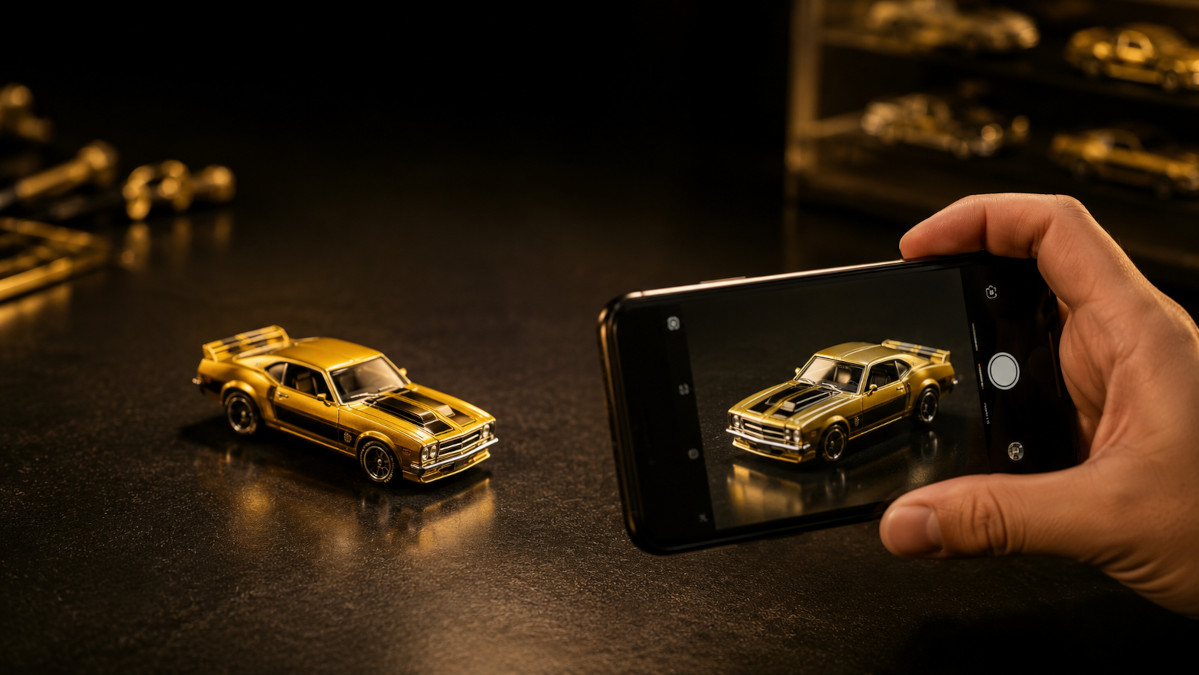
The shortcut: point your camera at the car and let the AI read it for you. Our scanner identifies the brand, casting, year and series from a photo, estimates its value, and fills in the details — you just review and save. Perfect for working through a whole box.
See how the AI scanner works →Quick reference
When a car lands in your hand, run the checklist: base (name, year, country) → wheels (Redline, Real Rider or plastic) → tampo & paint (design, Spectraflame?) → packaging (collector number, series) → Treasure Hunt markers. Five glances and you'll know what you're holding. Once it's identified, find out how much your Hot Wheels is worth and see where the market is heading in our Hot Wheels Value Guide 2026.